Contact Us


Hyguane: towards low-carbon hydrogen for Europe’s Spaceport
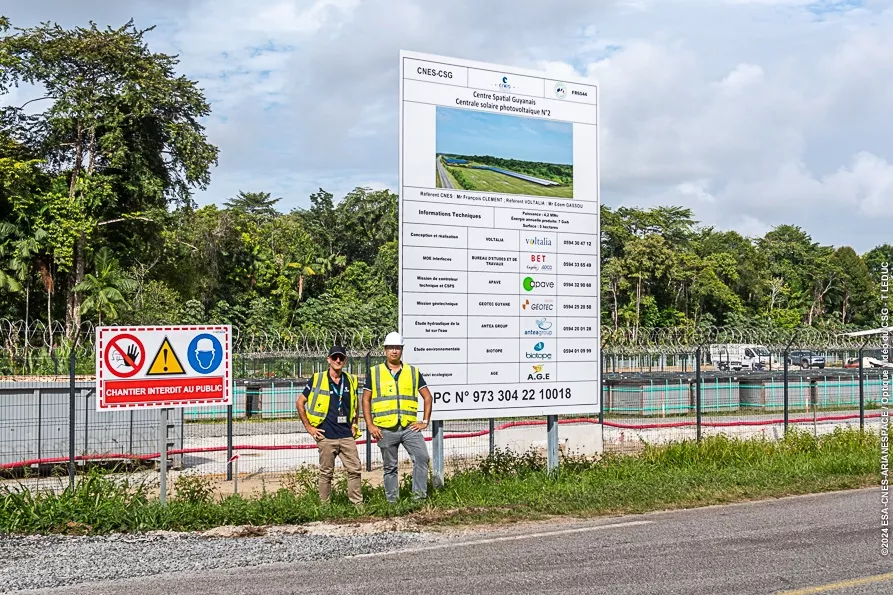
A crucial contract for the Hyguane project was signed in the Jupiter Control Room at Europe’s Spaceport. The contract confirmed the construction of a 4.5 MWp solar power plant named PV3 (third photovoltaic field) a key element in the project to supply low-carbon hydrogen for the spaceport.
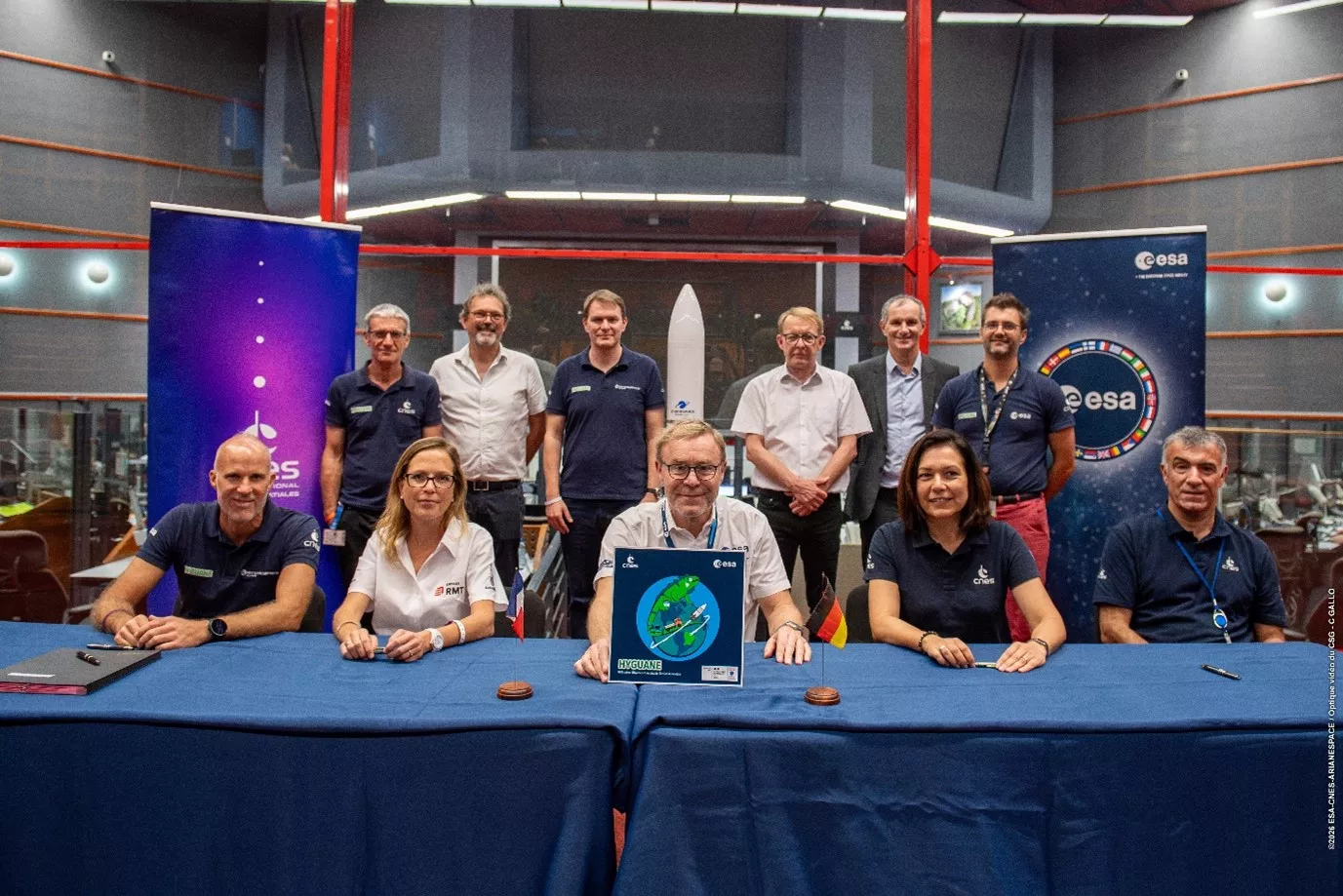
Front row, from left: MT Aerospace French Guiana Managing Director Michael Gärtner, RMT French Guiana Managing Director Nathalie Gouin, ESA’s Director of Space Transportation (at the time) Toni Tolker-Nielsen, CNES’s Director of Space Transportation Carine Leveau, CNES’s Director of Europe’s Spaceport Philippe Lier.
This solar power plant will be the third to be designed, connected, and operated by CNES at the Guiana Space Centre. Developed as part of the Hyguane project, PV3 will be connected to the spaceport’s power grid and will supply electricity to the low-carbon hydrogen production facilities for Ariane 6.
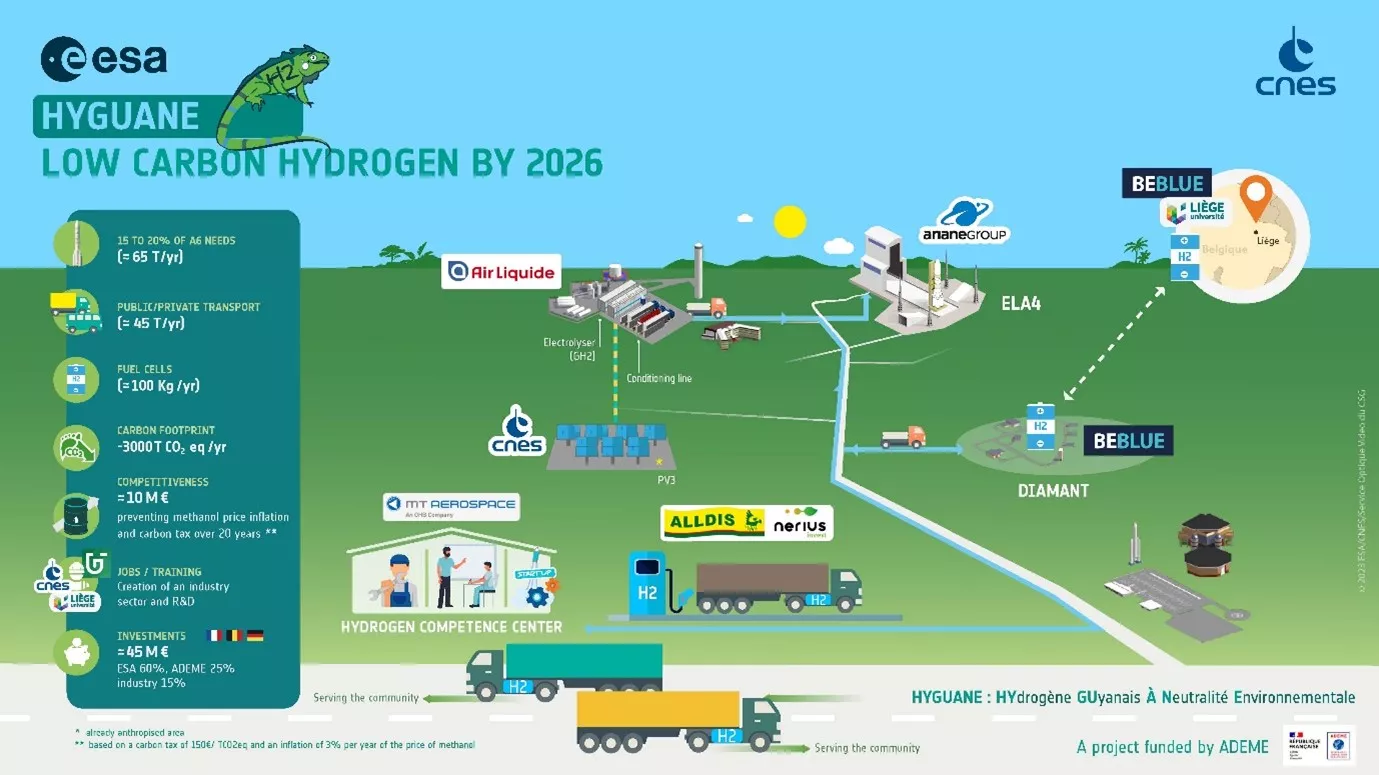
Hyguane, an acronym that stands for ‘Environmentally Neutral Guyanese Hydrogen’ is an ambitious project led by the European Space Agency (ESA) with French space agency CNES and industrial and academic partners to develop a low-carbon hydrogen ecosystem at the Europe’s Spaceport in French Guiana.
Julia Talamoni, energy transition engineer for the Hyguane project, explains, “The Hyguane project aims to produce low-carbon hydrogen to fuel Ariane 6. Currently, the hydrogen in use is produced in French Guiana from methanol steam reforming. This process produces high amounts of carbon and requires significant external heat and methanol, making the spaceport dependent on external supply. The Hyguane project is therefore part of a broader initiative to reduce the carbon footprint of space activities and works towards strengthening the sovereignty and autonomy of European access to space.”
For a low-carbon water electrolysis of hydrogen, the electricity used needs to come from a renewable energy source. “The installation of the PV3 solar farm provides a low-carbon power supply to the water electrolyser, leading to the production of a “low-carbon molecule”, explains Julia.
The pilot scheme of Hyguane will aim to produce 10 to 15% of Ariane 6 hydrogen needs per year. Beyond this, the Hyguane ecosystem will provide hydrogen to fuel heavy vehicles in French Guiana for regional mobility and to produce energy through hydrogen fuel cells, including electrical back-up of critical infrastructure systems at Europe’s Spaceport in case of black-out.
The Hyguane ecosystem will be completed with the construction of a hydrogen refuelling station and, pending funding from ESA Member States, a garage to maintain hydrogen-powered vehicles.
Work has already begun on a water electrolysis plant and a hydrogen conditioning centre used to compress and prepare the produced hydrogen for transport, with works on the other elements of the project due to start in 2026.
According to Teddy Peponnet, ESA’s Head of the Hyguane project, “The full HYGUANE ecosystem will be commissioned by the second half of 2027, signing the first low-carbon hydrogen-fuelled Ariane 6 ready to fly.”
ESA
On the same section
-
The French Space Agency’s commitments in French Guiana : review and outlook
29/01/2025Europe’s Spaceport: Recap of 2024 and outlook for 2025
28/01/2025Welcome to the new website of Europe's Spaceport
22/01/2025Energy transition at Europe’s spaceport
08/04/2024[Space Museum] update on the progress of the works
29/01/20242024 at Europe’s spaceport
15/01/2024Europe’s spaceport gets a new facility for satellites
06/12/2023[Space Museum] Progress report
25/09/2023EPCU S5 under construction
05/09/2023