Contact Us


ESA and the French space agency: new funding agreement signed
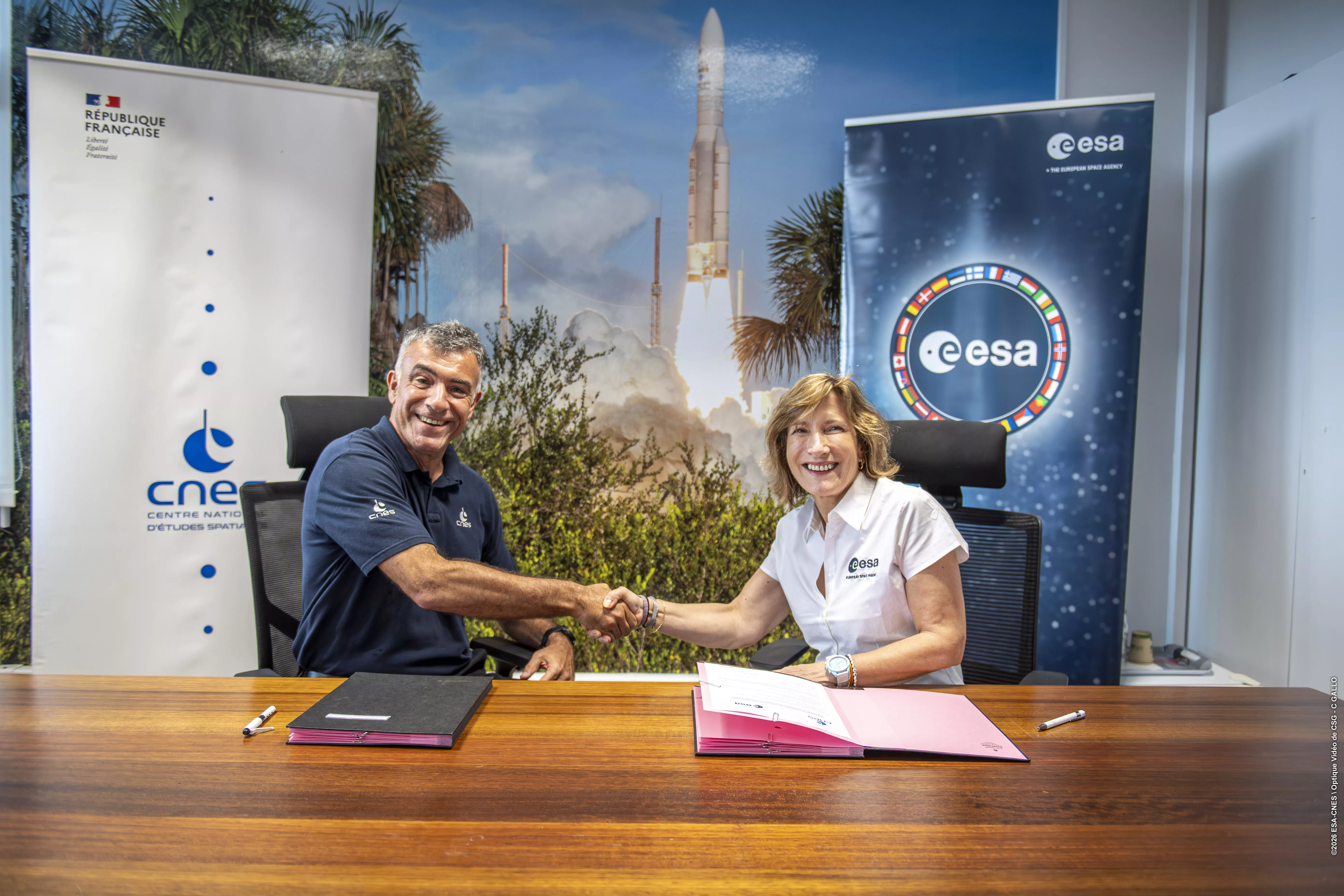
On 30 April, Géraldine Naja, ESA’s Director of Space Transportation, and Philippe Lier, Director of Europe’s spaceport, formalised a new funding agreement under the ESA-French space agency contract for operating Europe’s spaceport between 2026 and 2030.
European support for space-related activities in French Guiana
This contract covers all essential operational and maintenance activities, such as:
- upkeep of the estate,
- site security and surveillance,
- coordination of launch campaigns,maintenance of technical facilities (EPCU, flight safety, weather systems, infrast
- ructure, energy, water networks, air conditioning, IT systems, etc.)
It ensures that the facilities are maintained in operational condition and are continuously adapted to meet the requirements of ESA’s programmes and activities, as well as the operation of the Ariane and Vega launchers.
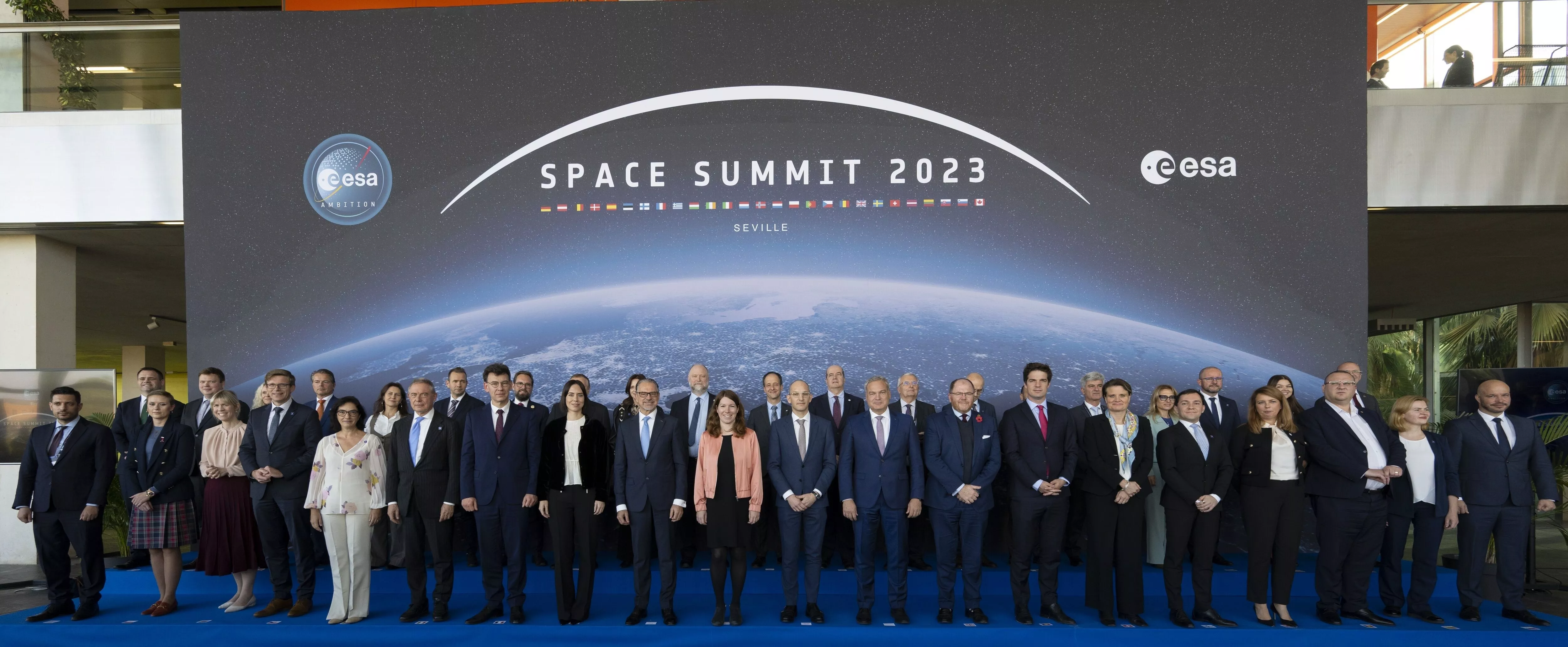
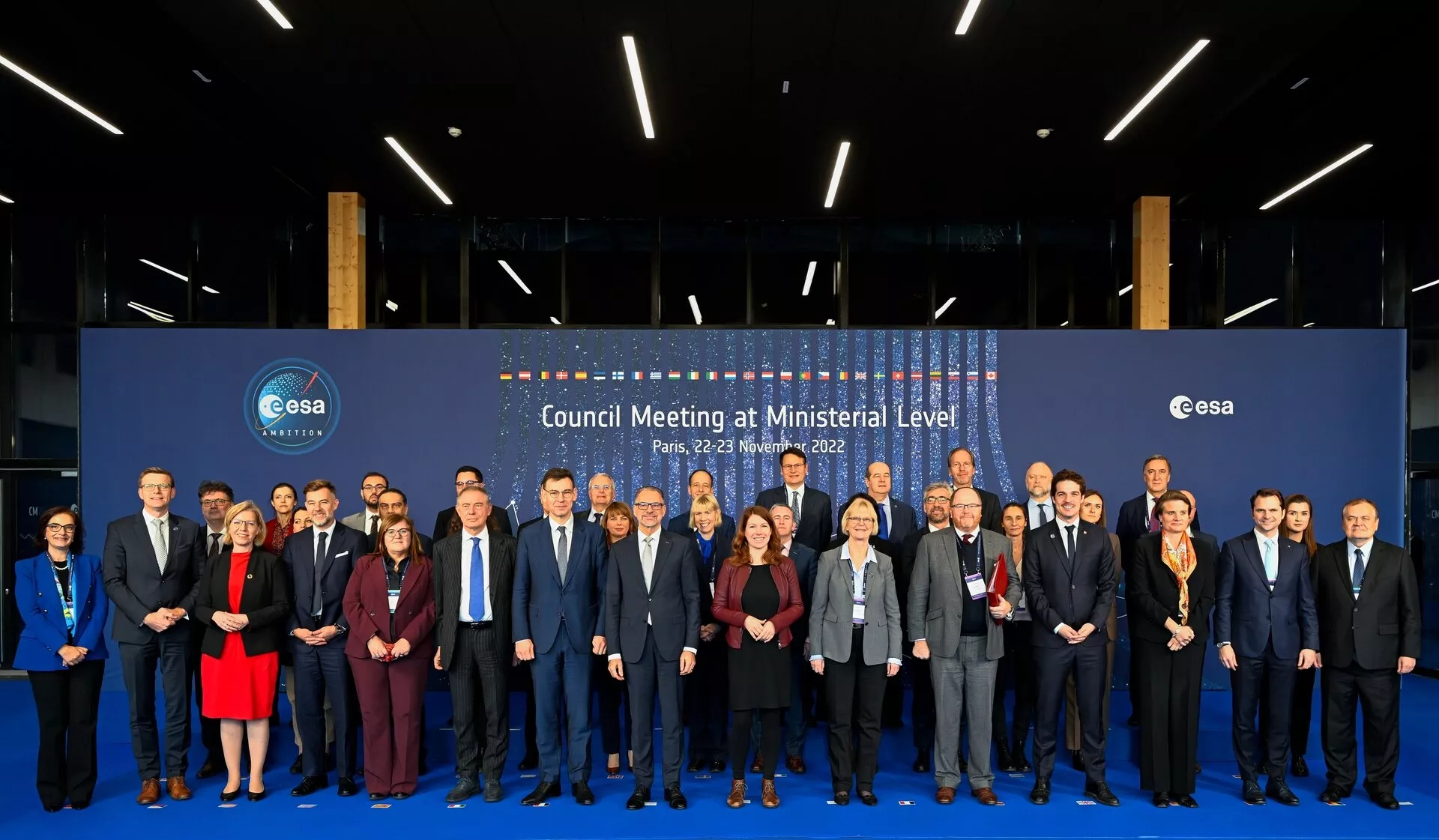
This is in line with the decisions taken by ESA Member States at the Ministerial Councils, which are held every three years to set the broad strategic direction and budgets for the European space sector. At the last Ministerial Council meeting in Bremen in November 2025, ministers approved a record budget, 15% of which was earmarked for Europe’s spaceport.
Signed for a fixed term of three years*, this new agreement represents an investment of over one billion euros, with around two-thirds contributed by ESA Member States, including France, and one-third by the French space agency.
*Two additional years have been proposed as an option and will be confirmed at the next Ministerial Council in 2028.
A new agreement to address the challenges of tomorrow’s space sector
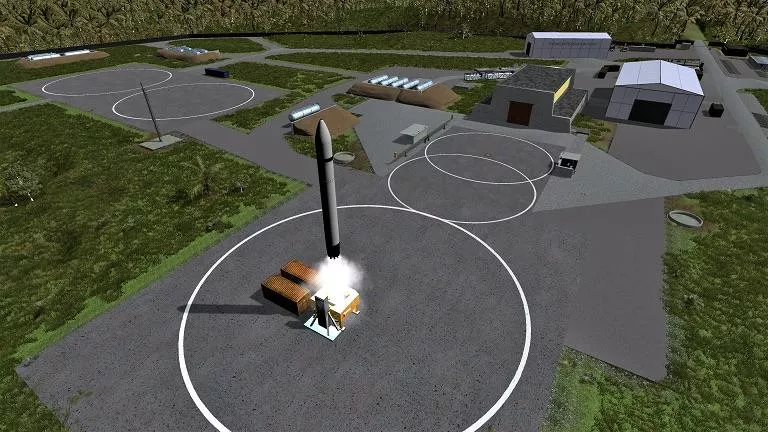
Negotiated following the decisions taken at ESA’s Ministerial Council 2025, this new agreement prepares Europe’s spaceport for developments in the space sector, in particular the arrival of micro- and mini-launchers. It sets out the funding rules and ensures fair access to the French space agency and ESA facilities for these new operators.
In addition to Europe’s spaceport’s day-to-day running, the agreement provides for the continuation of major structural modernisation projects. These include the “Europe’s spaceport-New Generation” programme, which involves, in particular, building an operations centre, funding one of the spaceport’s three solar farms, refurbishing the radar systems, and modernising the power and air-conditioning systems. It also forms part of the “Flexibility, Digital, Sustainability” programme, which aims to make the spaceport more flexible, more digital and more sustainable, with the goal of achieving carbon neutrality.
Finally, this new agreement introduces two new investment programmes (work packages 6 & 7) designed to enhance site security and increase the capacity for the simultaneous preparation of satellites.
Work packages and their funding
These various work packages form an integral part of the contract between ESA and the French space agency and provide the framework for the funding and activities undertaken to ensure the operation, maintenance and modernisation of the spaceport.
Work package 1 – Operations: ensures the day-to-day running of the site (flight safety, radar systems, coordination of operations, laboratories, EPCU). Funding has been increased by more than 10% to meet growing operational needs.
Work package 2 – Routine maintenance: covers the regular upkeep of technical facilities and preparation facilities. Its budget has also been increased by more than 10%.
Work package 3 – Extraordinary maintenance: funds one-off works and major repairs, with a 3% increase in funding.
Work package 4 – CSG-NG: modernisation project approved at CMIN 2019. No additional funding is provided for in this agreement; the remaining amount is the amount previously allocated.
Work package 5 – FDS (Flexibility, Digital, Sustainability): covers the modernisation of Europe’s spaceport (new infrastructure, e.g. Operations Centre, solar panels, etc.). The amounts for 2026-2027, provisionally agreed at CMIN 2022, have been confirmed.
Work package 6 – CSG-SR (Safety): involves works to enhance site safety in order to meet the requirements associated with the arrival of mini- and micro-launchers and to comply with new audit requirements.
Work package 7 – CSG-CAP (EPCU Capacity): aims to increase the capacity and modularity of EPCUs, enabling more payloads to be prepared simultaneously.
Funding for work packages 6 and 7 is estimated at €59 million for the period 2029–2030. The decision to proceed with these work packages has also been deferred until Ministerial Council 2028.
Did you know?
The ESA, which comprises 23 European countries, funds Europe’s spaceport through a contribution shared between France and the other ESA Member States. France covers one-third of the costs, while the remainder is shared among the countries according to their economic weight and the industrial benefits associated with the Ariane and Vega launchers. In return, each country can expect industrial benefits commensurate with its financial contribution.
This new agreement forms part of a long-standing partnership between ESA and the French space agency, which began 45 years ago. Since 1981, the ESA has provided financial support for the development of Europe’s spaceport, helping it to keep pace with technological and industrial challenges
On the same section
-
Public consultation for mini-launchers
27/02/2025The French Space Agency’s commitments in French Guiana : review and outlook
29/01/2025Europe’s Spaceport: Recap of 2024 and outlook for 2025
28/01/20252024 at Europe’s spaceport
15/01/2024Space Summit: outcomes for Europe’s spaceport
07/11/2023Round table on the modernisation of Europe’s spaceport
22/06/2023CNES's actions in French Guiana: review and outlook
24/02/2023Review of 2022 and outlook for 2023
18/01/2023[CMIN 2022] Key announcements of the ESA ministerial meeting
28/11/2022