Contact Us


VA266 mission in a nutshell
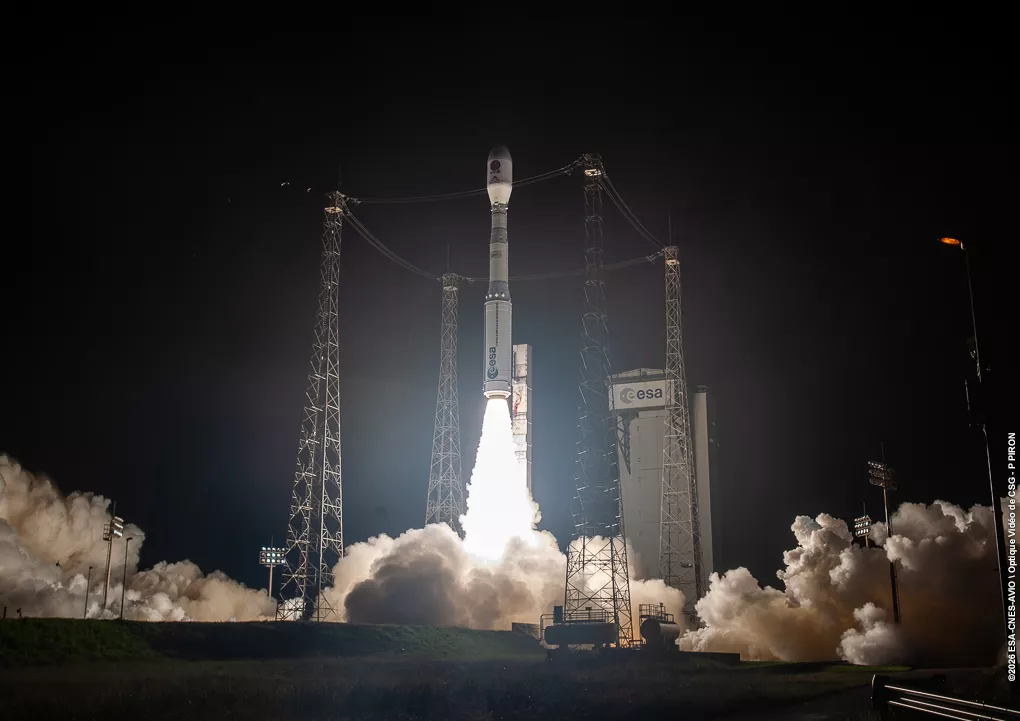
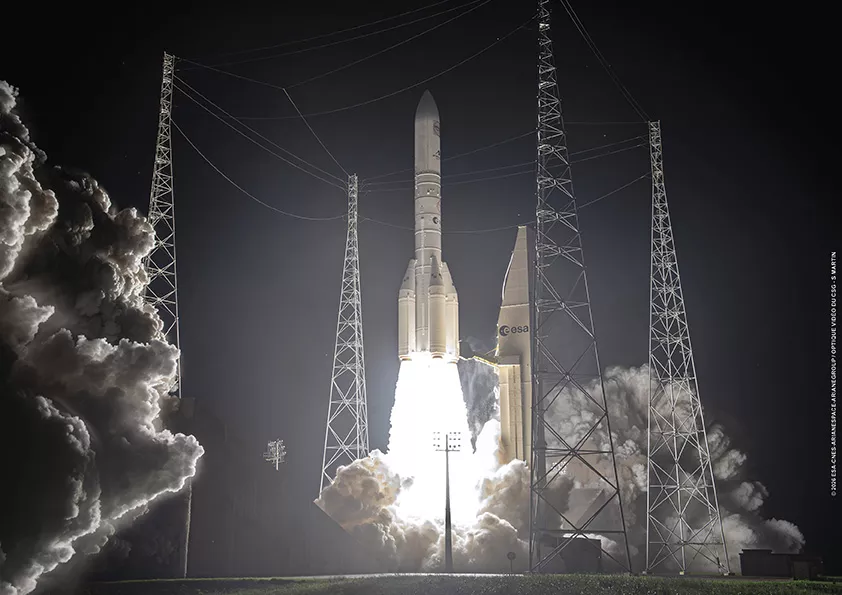
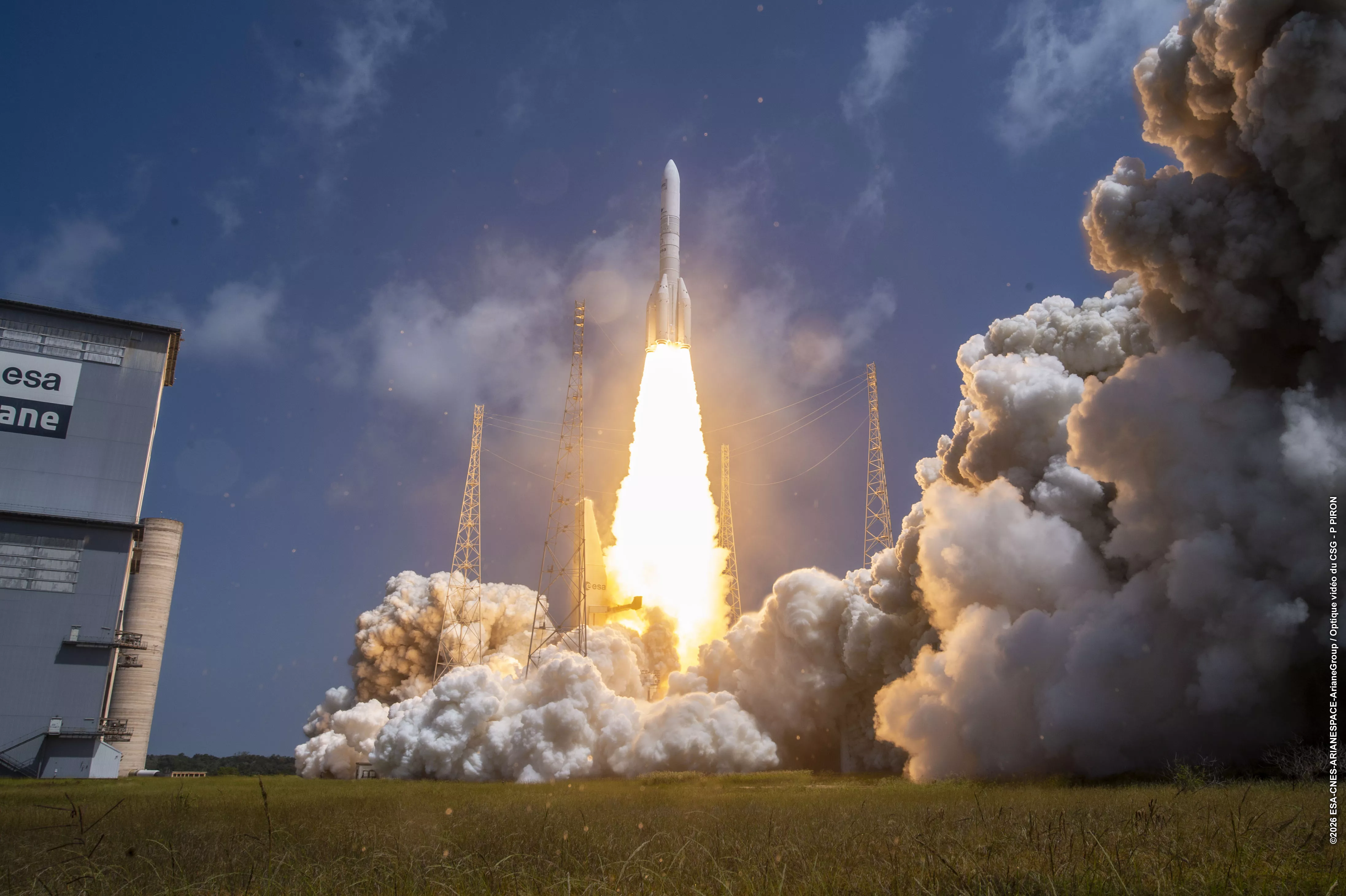
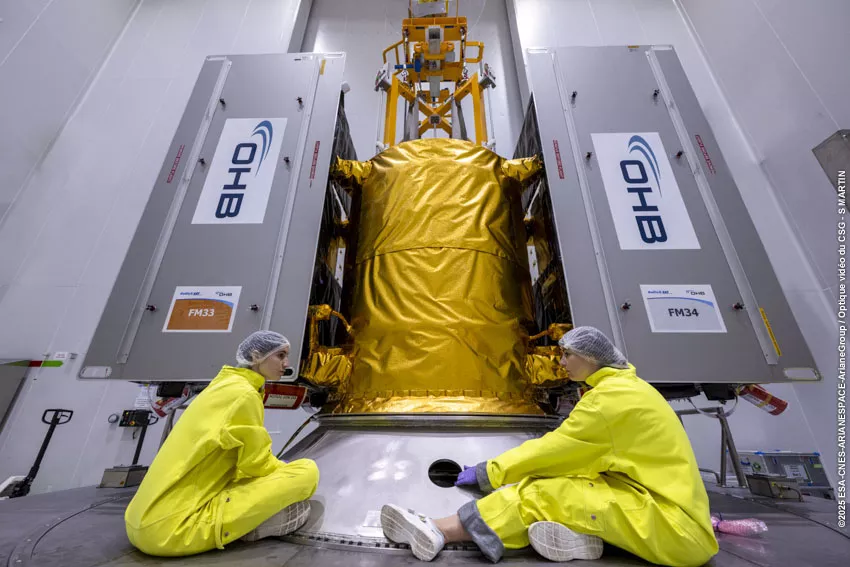
On December 17, 2025 at 2:01 a.m. local time (5:01 a.m. UTC, 6:01 a.m. CET), Ariane 6 will place into orbit a pair of Galileo satellites for the European Space Agency (ESA), on behalf of the European Commission and the European Union Agency for the Space Programme (EUSPA).
VA266 mission in a nutshell
- Satellite : SAT 33 and SAT 34 for the Galileo programme (Galileo L14)
- Client : European Commission & EU Agency for the Space Programme (EUSPA) within the scope of a contract signed with the European Space Agency (ESA)
- Mission : Global Navigation Satellite System (GNSS)
- Mass at launch : 700 kg approximately for each satellite
- Targeted orbit : Medium Earth Orbit at an altitude of approximately 22 922 km and 54° of inclination
- H0 : 12:01 a.m. local time (5:01 a.m. UTC, 6:01 a.m. CET)
- Mission duration (from lift-off to the seperation of the satellite) : 3 hours and 55
minutes.
Galileo L14 : boosting the EU's global navigation satellite system
The VA266 mission is the 4th Ariane 6 launch of the year.
Galileo is the world’s most precise global navigation satellite system, currently serving 4 5 billion users around the world. With Ariane 6 flight VA 266 representing the 14 th operational launch for the Galileo programme (Galileo L 14 two more satellites (designated SAT 33 and 34 will join the first generation of Galileo satellites.
This will bring the total number of satellites launched to 34 further improving the precision, availability and robustness of the Galileo system and services. Billions of people around the globe use Galileo every day, and it is crucial for key sectors such as rail, maritime, agriculture and search and rescue operations All smartphones sold in the European Single Market must be compatible with Galileo.
A flagship programme funded by the European Union ( Galileo is owned and managed by the European Commission. Since its inception, ESA leads the design, development and qualification of the space and ground systems, as well as procuring launches. ESA is also entrusted with research and development activities for the future of Galileo within the EU programme Horizon Europe. EUSPA manages the operations ( maintaining, and upgrading the Galileo system) while acting as the service provider, overseeing market uptake and closing the loop with users.
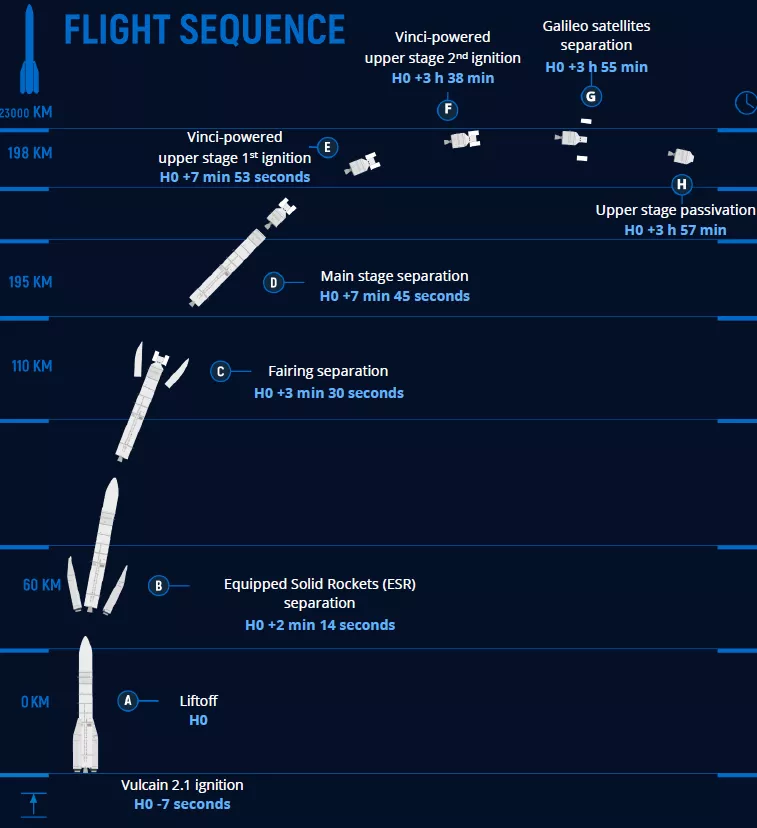
Flight sequence
The nominal duration of the mission (from lift-off to separation of the satellite) is: 3 hours and 55
minutes.
Seperation of SAT-33 and SAT-34 :3 hours and 55 minutes.
On the same section
-
Vega-C successfully launches Sentinel-3C and FLEX satellites
15/09/2026VA270 mission in a nutshell
25/08/2026VV30 mission in a nutshell
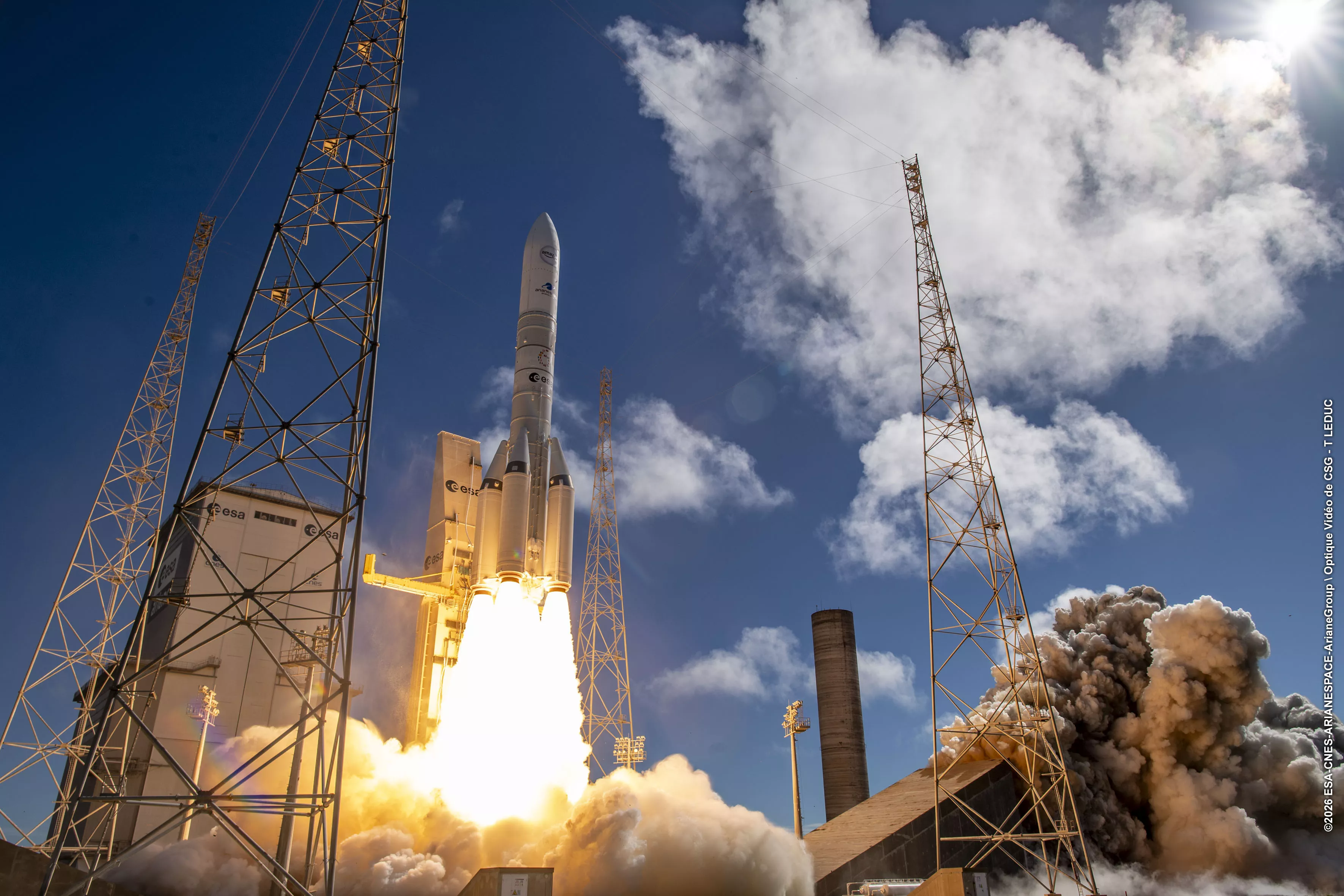
25/08/2026Ariane 6 successfully launches 36 additional Amazon Leo satellites
17/06/2026SMILE in Orbit: VV29 Lights Up the Guyanese Sky
18/05/2026VV29: Final steps before lift-off
12/05/2026VV29 mission in a nutshell
11/05/2026Ariane 6 successfully launches another 32 Amazon Leo satellites
30/04/2026The first Ariane 64 successfully launches 32 Amazon LEO satellites
13/02/2026