Contact Us


VV29 mission in a nutshell
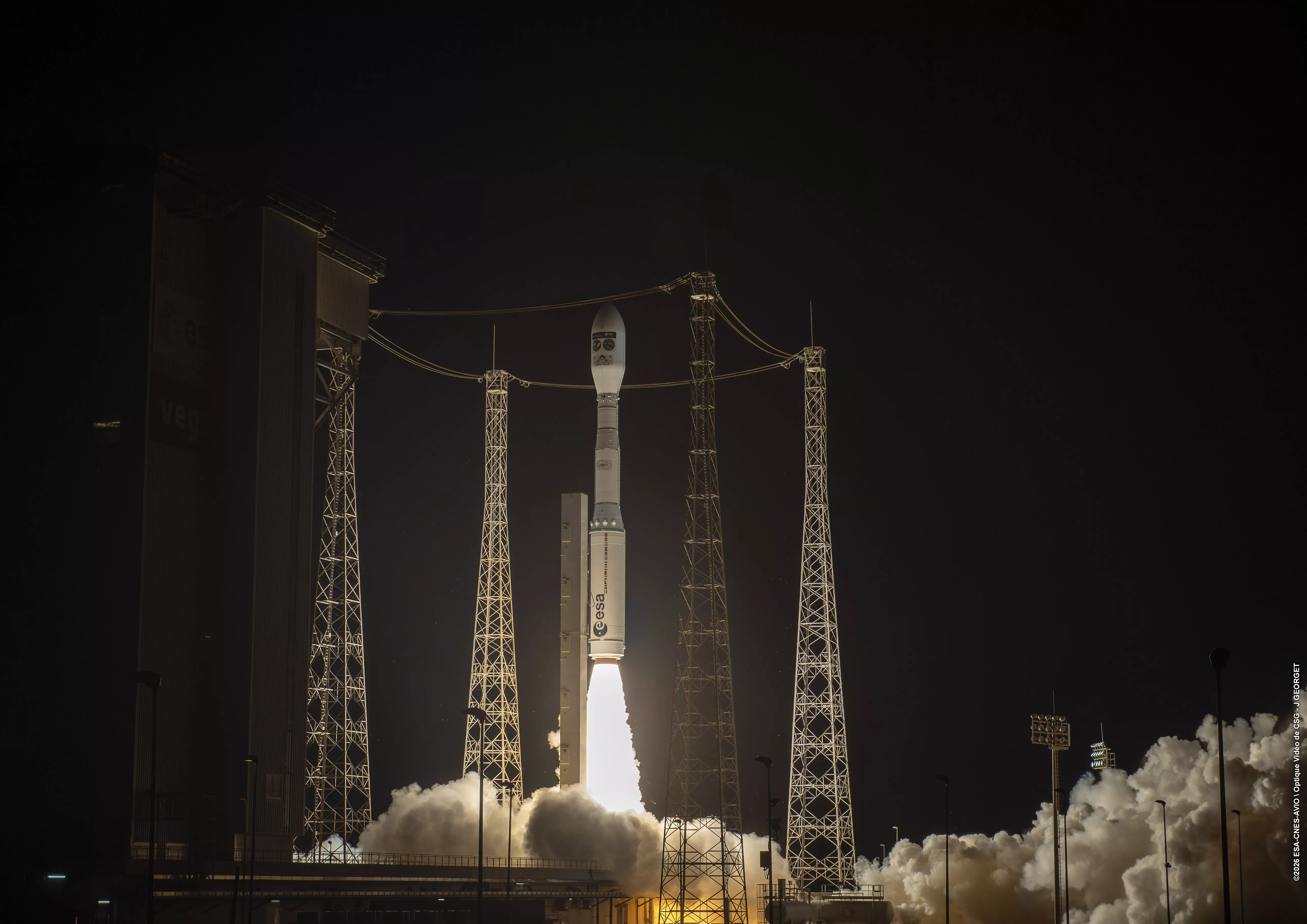
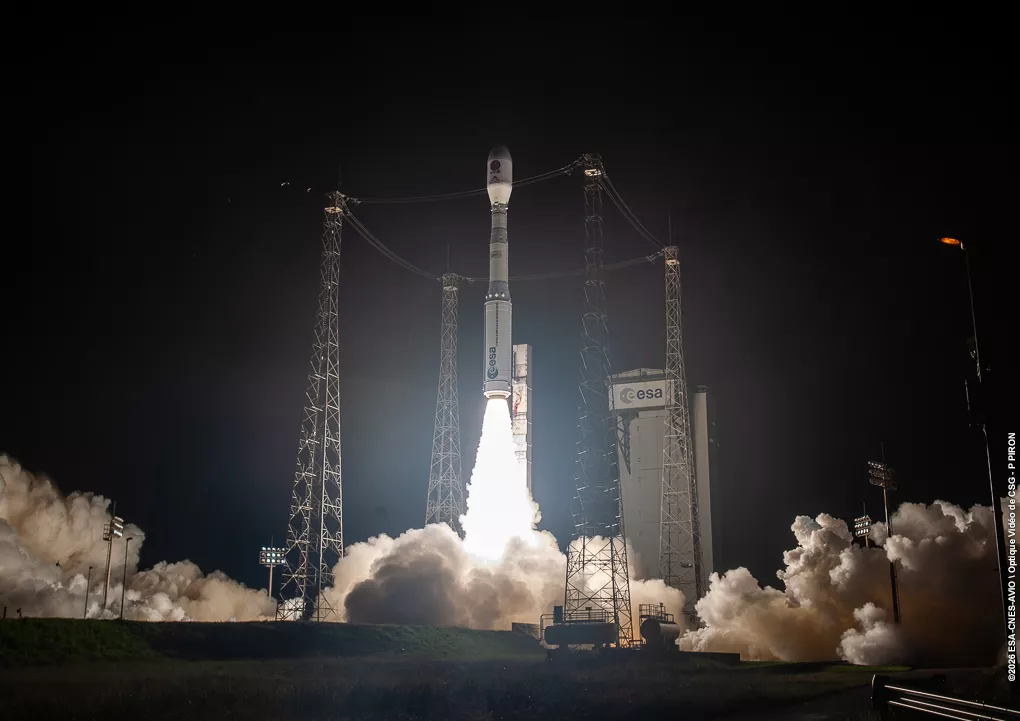
The European-Chinese Smile mission, initially scheduled for April 9th, is now due to launch on Tuesday 19 May 2026, at 00:52 local time, 05:52 Paris time, 04:52 (UTC) on a European Vega-C rocket.
VV29 mission in a nutshell
- Satellite : Solar wind Magnetosphere Ionosphere Link Explorer (Smile)
- Client : European Space Agency’s (ESA) and Chinese Academy of Science (CAS)
- Mission : scrutinise Earth’s response to the solar wind
- Mass at launch : 2250 kilograms
- Targeted orbit : Low Earth Orbit (LEO) at an altitude of approximately 700 km
- Launch window : 00:52-01:32 local time, 05:52-06:32 Paris time
- Mission duration (from lift-off to the seperation of the satellite) : 57 minutes.
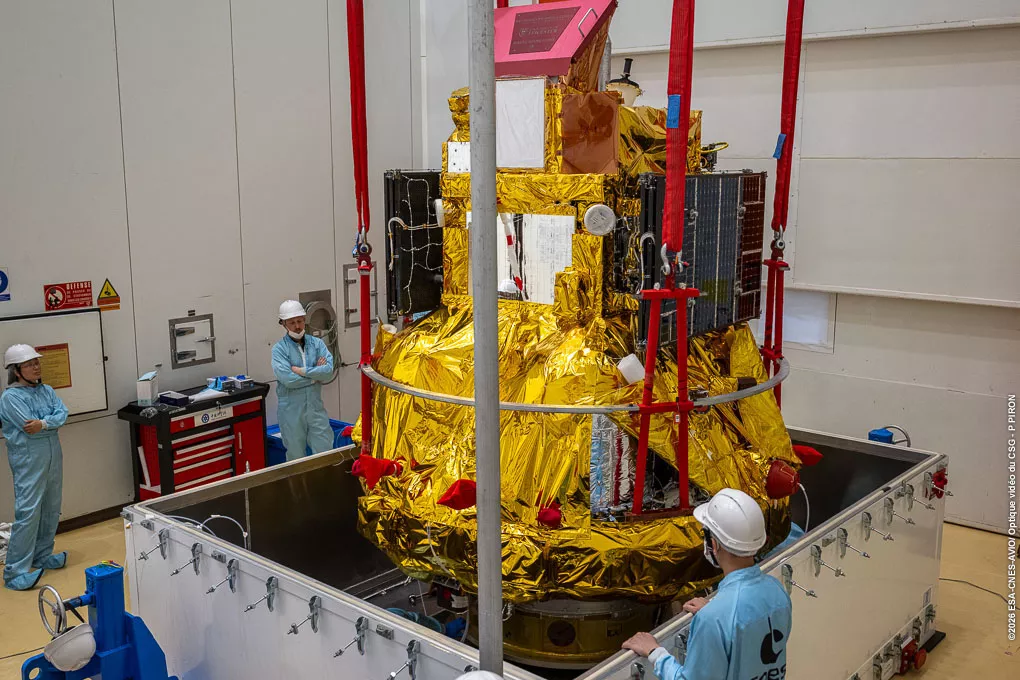
Smile : a global answer to a global question
The VV29 mission marks the first Vega-C launch of 2026 from Europe’s Spaceport and the seventh Vega-C flight overall since its inaugural launch in July 2022. It is also the first Vega-C mission to be operated by Avio.
Smile stands for Solar wind Magnetosphere Ionosphere Link Explorer. It is a joint mission between the European Space Agency (ESA) and the Chinese Academy of Sciences (CAS).
It will give humankind its first complete look at how Earth reacts to streams of particles and bursts of radiation from the Sun.
Four instruments on board
Smile will reveal the interaction between the solar wind and Earth using four unique instruments. Each will collect a vital puzzle piece of information that, when combined with information from the other three instruments, will reveal our magnetosphere in a whole new light.
- Ultraviolet aurora imager (UVI) (Led by CAS, contributions from ESA) - Recording the northern lights to see how the interaction between the solar wind and the magnetosphere influences the auroras.
- Soft X-ray imager (SXI) (Led by ESA) - Photographing the magnetosphere to see how Earth’s magnetic
shield defends us against dangers from the Sun. - Light ion analyser (LIA) (Led by CAS) - Collecting solar wind particles with two sensors to measure the Sun’s attack against Earth’s defence.
- Magnetometer (MAG) (Led by CAS) - Measuring the magnetic field carried by the solar wind, to compare the Sun’s attack against Earth’s defence.
Smile builds on scientific and technological heritage from previous ESA space science missions such as ROSAT, XMM-Newton, Cluster, Swarm, SOHO or Solar Orbiter. It will collect data that complements past and current missions. And it is already paving the way for future space weather research.
Flight sequence
The nominal duration of the mission (from lift-off to separation of the satellite) is: 57 minutes.
Seperation of satellite :57 minutes.

On the same section
-
Vega-C successfully launches Sentinel-3C and FLEX satellites
15/09/2026VV30 mission in a nutshell
25/08/2026VA270 mission in a nutshell
25/08/2026Ariane 6 successfully launches 36 additional Amazon Leo satellites
17/06/2026SMILE in Orbit: VV29 Lights Up the Guyanese Sky
18/05/2026VV29: Final steps before lift-off
12/05/2026Ariane 6 successfully launches another 32 Amazon Leo satellites