Contact Us


Flight Vega-C : VV27 mission in a nutshell
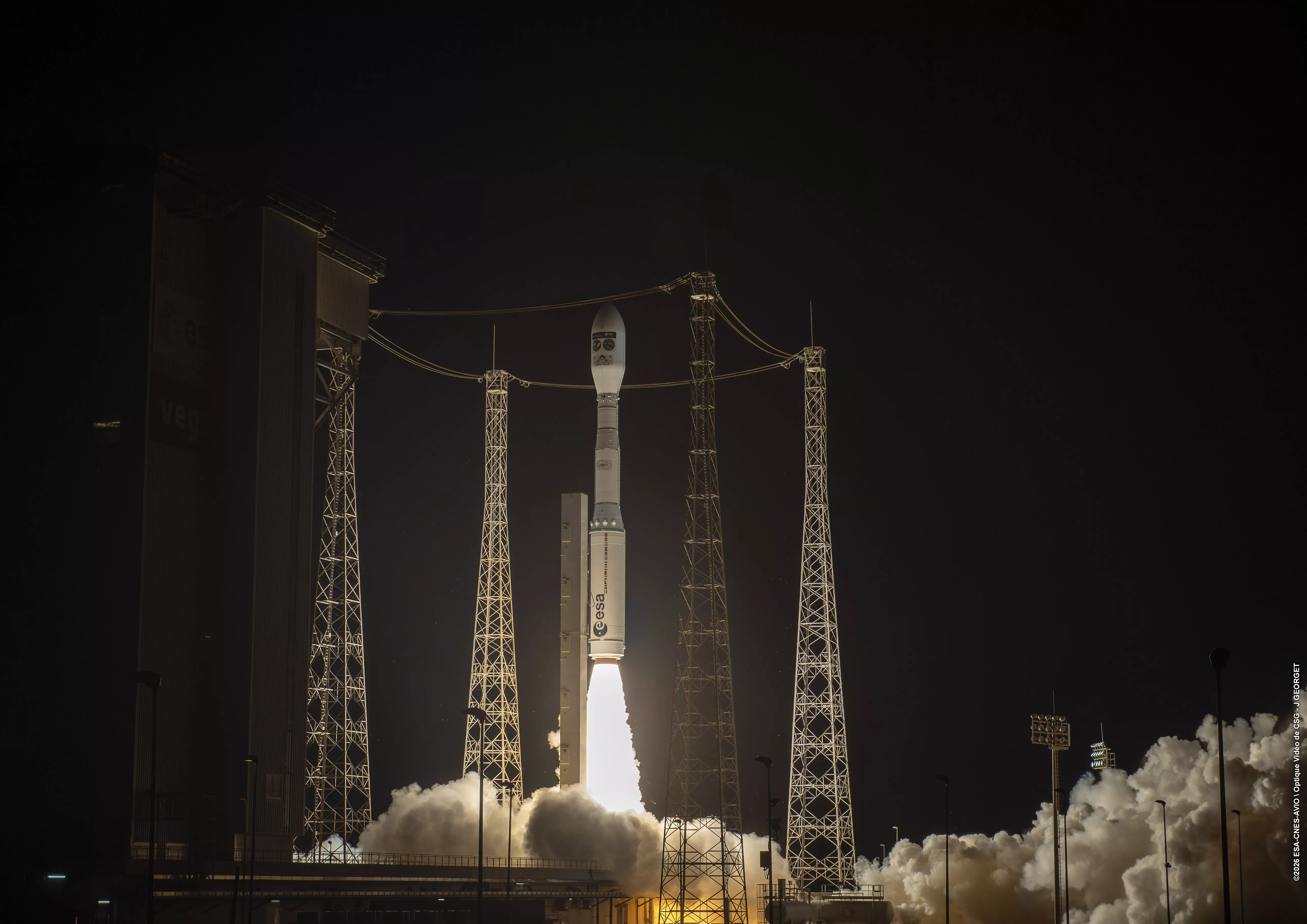
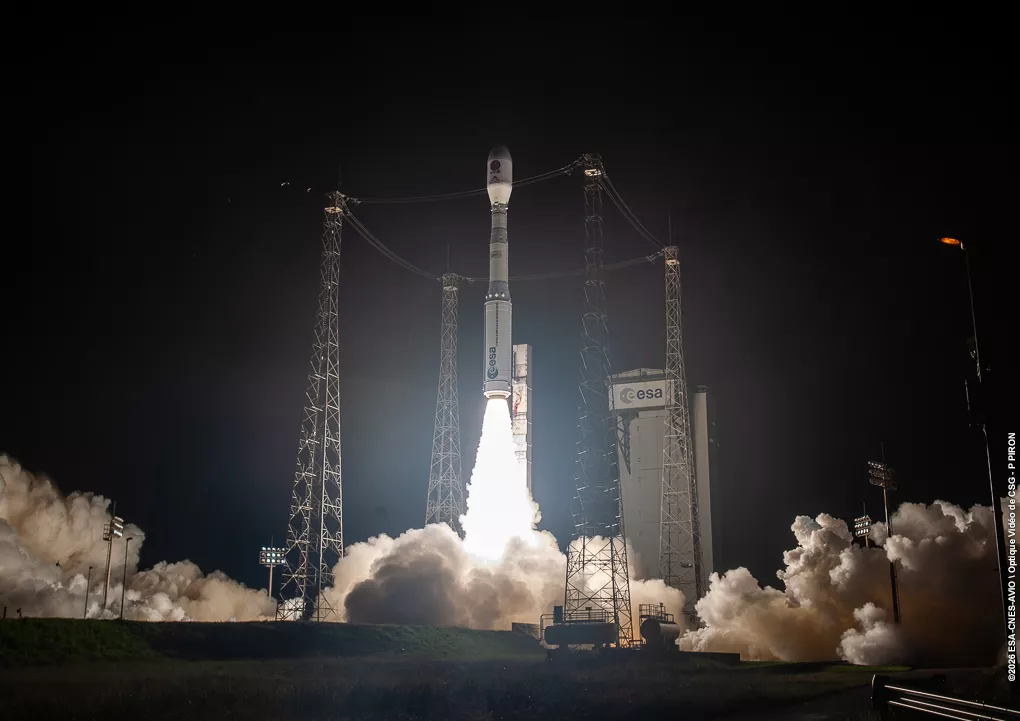
On July 25, 2025, Vega-C will place into orbit Airbus Defence and Space's CO3D satellites, as well as the CNES's MicroCarb satellite. An update on the upcoming mission from Europe's spaceport.
VV27 en bref
Payloads : MicroCarb & CO3D
Clients : CNES et Airbus Defense and Space (CO3D), CNES (MicroCarb)
Mission : Earth observation
Mass : 285Kg/satellites (CO3D), 180kg (MicroCarb)
Lifetime : 8 years (CO3D), at least 5 years (MicroCarb)
Targeted orbit : sun-synchronous (SSO)
H0 : 23:03 Kourou time, 02:03 Universal time (UTC), July 26, 04:03 Paris time, July 26
Nominal duration of the mission (from lift-off to separation of all the satellites) : 1 hour and 41 minutes.
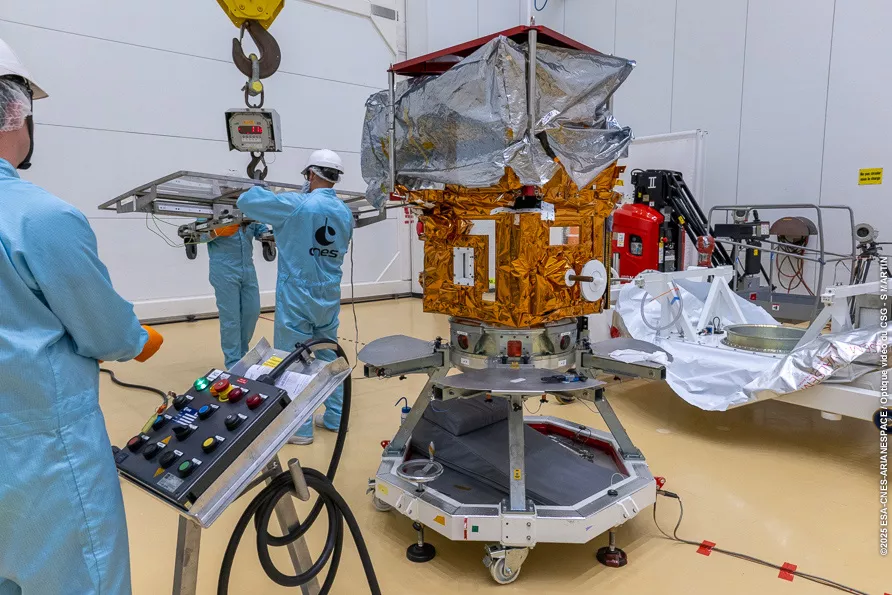
On Friday July 25th, 2025, at 11:03 p.m. local time (02:03 a.m. UTC, 04:03 a.m. CEST, on July 26th, 2025), Vega-C is to launch Airbus Defence and Space's CO3D satellites, as well as the CNES's MicroCarb satellite. This mission, called “VV27” will place the main passengers, the four satellites composing the CO3D constellation, as well as the auxiliary passenger, MicroCarb, into Sun-synchronous orbits.
About the payloads
CO3D, an optical satellite constellationn to map the world in 3D
A partnership between Airbus Defence and Space and CNES, the CO3D (Constellation Optique 3D) satellites will deliver a global highresolution Digital Surface Model (DSM). The mission will provide 50 cm stereo imagery as well as high resolution imagery for government and commercial customers. Built and owned by Airbus, CO3D comprises four dual-use satellites, each based on its all-electric S250 satellite product line. The constellation is operated from an Airbus ground segment. CNES is in charge of the Image Calibration Centre based in Toulouse.
MicroCarb, measuring global CO2 distribution
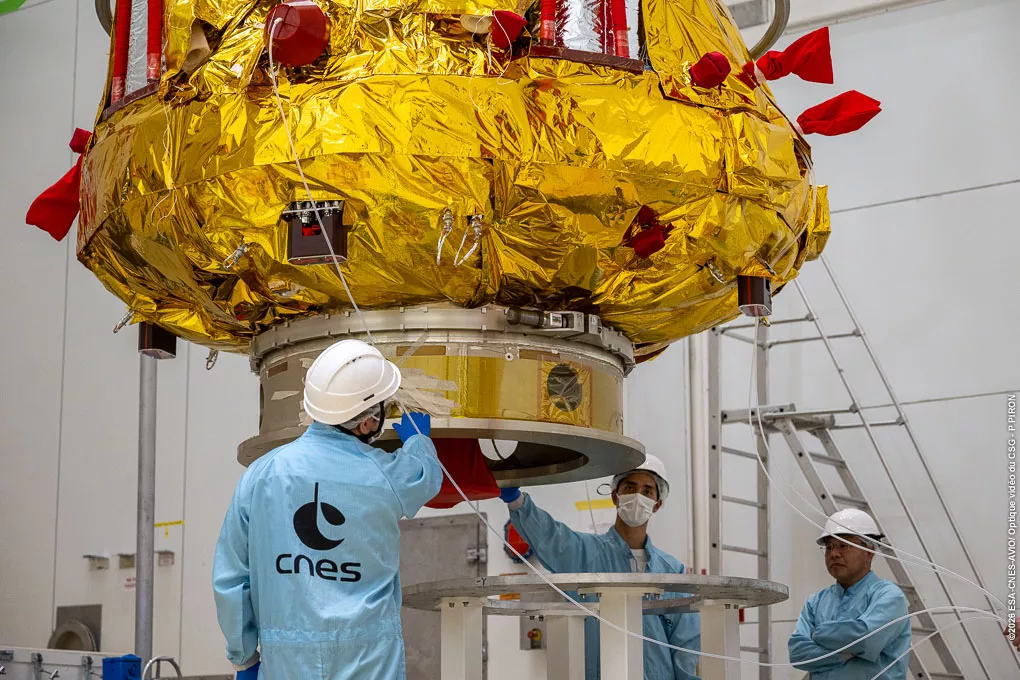
The CNES’ MicroCarb mission is designed to map sources and sinks of carbon dioxide (CO₂), the most important greenhouse gas, on a global scale. The mission’s goal is to demonstrate the ability to measure atmospheric concentration CO2 globally with a high degree of precision of 1 ppm, with a 80 kg compact dispersive spectrometer instrument. MicroCarb’s platform is based out of the last copy of the CNES Myriade series. Its instrument was built by Airbus Defence and Space (FR) under CNES direction, with the funding of the French government through the Future Investment Plan (PIA) managed by the National Research Agency (ANR). The satellite integration was realized by Thales Alenia Space UK through a dedicated partnership implemented with the UK Space Agency
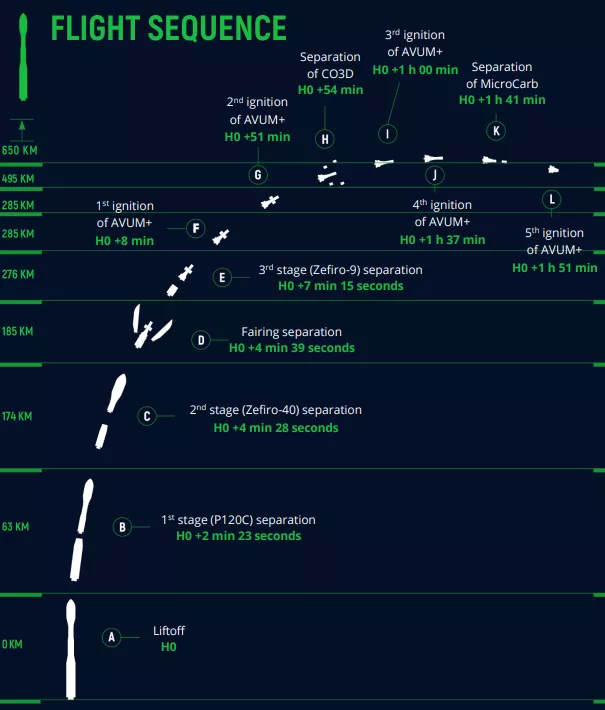
Flight sequence
The nominal duration of the mission (from lift-off to separation of all the satellites) is: 1 hour and 41 minutes.
Separation of CO3D: 54 min
Separation of MicroCarb: 1h and 41 minutes
On the same section
-
Vega-C successfully launches Sentinel-3C and FLEX satellites
15/09/2026VV30 mission in a nutshell
25/08/2026VA270 mission in a nutshell
25/08/2026Ariane 6 successfully launches 36 additional Amazon Leo satellites
17/06/2026SMILE in Orbit: VV29 Lights Up the Guyanese Sky
18/05/2026VV29: Final steps before lift-off
12/05/2026VV29 mission in a nutshell
11/05/2026Ariane 6 successfully launches another 32 Amazon Leo satellites
30/04/2026The first Ariane 64 successfully launches 32 Amazon LEO satellites
13/02/2026